
2026 Coiled Tubing Simulator Report Trends, Standards and Training Insights2026 Coiled Tubing Simulator Report Trends, Standards and Training Insights
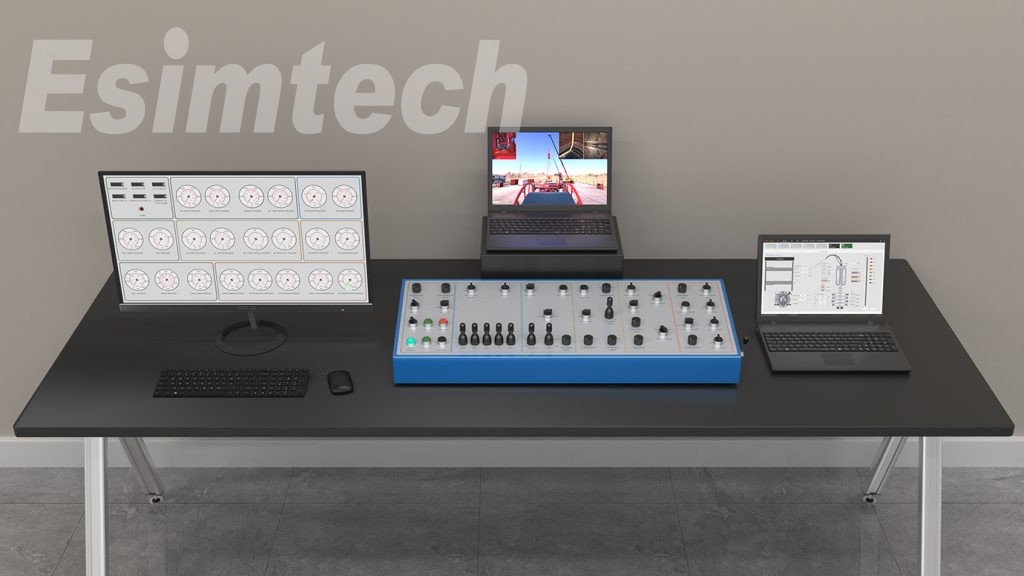
In the offices of oilfield service companies, the coiled tubing simulator has stopped being a training department curiosity and become a contract issue. Operators now ask pointed questions during tenders: how do you train your intervention crews, how do you assess their competence, and what evidence can you produce? Service companies that can answer with simulator-based training records win work; those that cannot are losing it. This report examines how portable coiled tubing simulators are being deployed by service companies, what the industry data and standards say about the direction of training, and what the trends mean for organizations building their intervention training programs in 2026.
The deployment patterns visible across the industry tell a consistent story. Leading service companies are moving their coiled tubing training out of fixed classrooms and into the field, using portable systems at bases, camps, and rig sites. The reason is economic as much as educational: a portable unit deployed across multiple locations delivers more training hours per dollar than a fixed installation, and it puts the training where the crews are, which means it actually gets used. The companies that adopted this model early report the same sequence of results: utilization rises, crews train more often, assessment records improve, and operators begin requesting those records in tenders.
Application Cases: How Service Companies Deploy the Systems
The application cases from the past year illustrate the pattern. One international service company equipped its regional bases with portable units and standardized the scenario libraries across all of them, so that a crew trained in one region produces the same assessment evidence as a crew trained in another. The company reports that its intervention training volume tripled in the first year without adding instructors, because the units travel to the crews instead of the crews traveling to the units. Another company uses its portable system primarily for pre-job rehearsal: before stimulation and cleanout campaigns, the actual crew rehearses the procedure on the simulator at the base, and supervisors report fewer procedural errors and calmer execution during the jobs themselves.
A third case shows the standards angle. A training institute serving several service companies adopted a portable coiled tubing simulator with a full assessment suite, and began issuing objective performance reports with every certificate. When one of the region’s operators introduced a requirement for simulator-based training evidence, the institute found itself with a ready answer and a growing contract book, while competitors without assessment capability were left scrambling to upgrade. The lesson from these cases is consistent: the systems that produce evidence are the ones that win the contracts.
Industry Data and Standards Dynamics
The data behind these developments points in one direction. Intervention incident analyses consistently find that procedural errors cluster in the early phase of operations and in the first minutes of abnormal events, both windows that simulator training directly targets. Standards bodies are responding: certification frameworks for intervention personnel are placing greater weight on documented, simulator-based assessment, and operators are auditing training records more strictly than ever. The practical consequence is that attendance-based certification is losing credibility, and simulator-produced evidence is becoming the currency of training assurance.
The standards trend has a specific implication for equipment choices. If assessment evidence must be consistent across an organization’s training locations, those locations need systems that share the same scenario libraries and assessment logic. This is why service companies increasingly standardize on a portable coiled tubing simulator that matches their headquarters systems, and why buyers are specifying assessment capabilities rather than leaving them optional. The era of the simulator as a demonstration tool is ending; the era of the simulator as an evidence machine is beginning.
Trend Projections and Training Recommendations
Three projections follow from the current trajectory. First, simulator-based evidence will become a standard requirement in intervention training procurement, moving from a differentiator to a baseline expectation. Second, portable deployment will continue to outpace fixed installation, because the utilization economics are decisive for distributed organizations and because mobile capacity is what regional standards increasingly demand. Third, integration between visual training and simulation will deepen, with animation-based pre-briefs becoming the standard first layer of intervention curricula, so that trainees watch the procedure, practice it, and debrief against the ideal sequence.
For organizations building their programs, the recommendations are direct. Invest in assessment capability now, because the evidence requirements will only tighten. Choose portable configurations when your operations are distributed, because training capacity that cannot travel cannot serve an organization that operates in many places. Pair simulation with visual training, because the watch, practice, debrief cycle produces measurably better retention than practice alone. And treat the simulator as infrastructure for both training and tenders, because the same assessment records that improve crew competence also win contracts.
The 2026 Outlook for Intervention Training
The outlook for 2026 is clear. The coiled tubing simulator market is converging on a standard of practice: physics-faithful simulation, portable deployment, integrated visual training, and objective assessment. Service companies that adopt this standard will enter the next tender cycle with documented competence and mobile training capacity, while competitors without it will face an increasingly difficult qualification process. The industry is also connecting intervention training to the broader emergency response stack, and the same simulation principles are spreading to drilling emergency preparedness. Drilling emergency simulator programs are being paired with intervention training in integrated competency systems, because operators want one coherent picture of their crews’ ability to respond under pressure, whether the event happens during drilling or during a workover.
The organizations that understand this integration will define the training standards of the next decade. The question is no longer whether simulation works, it is whether your training program can prove it works. The portable coiled tubing simulator, deployed where the crews are, producing evidence that operators trust, is the answer the market is converging on, and the companies that act on it now will be the ones setting the benchmark that everyone else measures against.