
For children growing up with more than one language, books can be a simple and enjoyable way to strengthen vocabulary, improve comprehension, and build confidence. Pashto children's books can be especially useful for children who speak Pashto at home while learning English, Urdu, or another language at school. These books allow children to see familiar words, cultural ideas, family traditions, and everyday situations in Pashto.
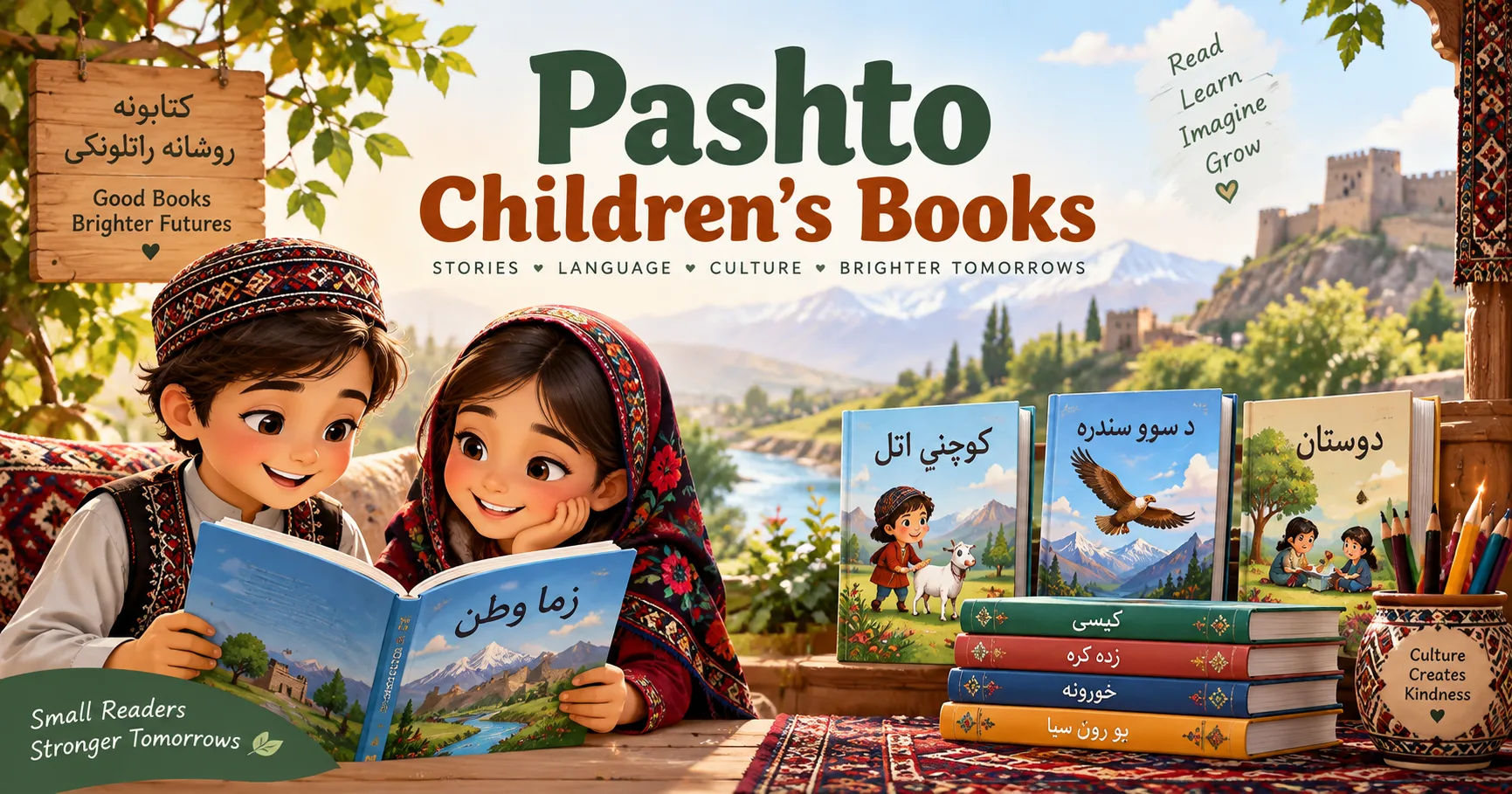
Bilingual children often move between languages depending on where they are and whom they are speaking with. A child might use Pashto with grandparents, Urdu with friends, and English in the classroom. Reading in Pashto gives them another opportunity to use and understand their heritage language in a meaningful context.
What Makes a Book Useful for a Bilingual Child?
A good children's book does more than teach individual words. It introduces children to sentence patterns, storytelling, emotions, descriptions, and conversations. For bilingual children, these elements can support language development in ways that ordinary vocabulary exercises may not.
Books also provide repeated exposure to language. A child may encounter the same words several times throughout a story. This repetition can make unfamiliar vocabulary easier to remember.
Pictures are another important part of children's books. When a child sees an illustration alongside a Pashto word or sentence, the visual information can help them understand the meaning without translating every word into another language.
Supporting the Heritage Language
One of the biggest benefits of Pashto children's books is that they can support a child's connection with their heritage language.
Children who hear Pashto at home may understand it well but have difficulty reading or speaking it confidently. This can happen when their education mainly takes place in English or Urdu.
Regular reading can give the child more opportunities to see Pashto in written form. Over time, this can help them become more comfortable recognizing vocabulary and understanding sentence structures.
Keeping Pashto Part of Everyday Life
Language becomes easier to maintain when children encounter it regularly. A book can turn Pashto practice into an enjoyable activity rather than a formal lesson.
Parents can read stories before bedtime, during weekends, or whenever the child wants a quiet activity. The goal does not have to be completing a certain number of pages. Enjoying the story is often more important.
Building Vocabulary Naturally
Children can learn new Pashto vocabulary from context. For example, if a story describes a family visiting a village, children may encounter words related to relatives, food, animals, clothing, transportation, or nature.
Because the words appear within a story, children can connect them with actions and situations. This can make vocabulary more memorable than learning isolated word lists.
Can Pashto Books Help Children Learn English Too?
Yes, reading in one language can support broader literacy skills that may also benefit another language.
A child who understands how stories work in Pashto may find it easier to understand stories in English. They can recognize concepts such as characters, settings, problems, solutions, and sequences of events.
However, this does not mean that reading Pashto automatically teaches English vocabulary. Children still need regular exposure to English to develop English-specific vocabulary, grammar, pronunciation, and writing skills.
The two languages can support each other while still requiring separate practice.
The Importance of Bilingual Reading
Bilingual reading can take several forms. A parent might read a story in Pashto first and then discuss the same story in English or Urdu. Another option is to read in Pashto and ask the child questions in the language they are most comfortable using.
This approach can help children understand the story without feeling pressured to translate every sentence.
Reading in Pashto and Discussing in English
Suppose a child reads a Pashto story about a young character helping a family member. After reading, a parent could ask questions in English.
The child might explain what happened, identify the characters, or describe the lesson of the story. This activity combines Pashto reading with English speaking and comprehension.
It also demonstrates that languages do not need to be kept completely separate during family learning activities.
Comparing Words Between Languages
Parents can occasionally compare words in Pashto, English, and Urdu. This can be particularly interesting when the child notices that certain words sound similar or have related meanings.
The comparison should remain simple. The purpose is to help children notice how languages work rather than turn story time into a grammar lesson.
Cultural Learning Through Pashto Stories
Language and culture are closely connected. Stories often contain traditions, family relationships, values, places, foods, and social situations that children recognize from their own lives.
Pashto children's books can introduce younger readers to cultural details that may not appear frequently in their school textbooks.
For children living outside Pashto-speaking communities, this can be especially valuable. A story can give them a connection to family history and cultural traditions even when they do not encounter Pashto regularly outside the home.
Helping Children Understand Their Background
Children naturally become curious about where their family comes from. Books can provide age-appropriate ways to explore that background.
A child may ask about a character's clothing, a traditional meal, a celebration, a village, or a family custom. These questions can lead to useful conversations between parents, grandparents, and children.
This makes reading a shared cultural experience rather than simply a language exercise.
Improving Reading Confidence
Bilingual children sometimes feel more confident reading in one language than another. If Pashto is their home language, starting with familiar stories can give them a comfortable place to practice.
Confidence matters because children who enjoy reading are often more willing to read independently.
Parents should avoid correcting every small mistake. Too much correction can make reading feel stressful. Instead, adults can focus on helping the child understand the story and gradually improve difficult areas.
Choosing the Right Difficulty
The book should be challenging enough to introduce new language but not so difficult that the child cannot understand the story.
If almost every sentence contains unfamiliar vocabulary, the child may lose interest. A book with familiar language, supportive illustrations, and a few new words can provide a better balance.
How Parents Can Use Pashto Children's Books Effectively
Simply owning books is not enough. The way adults use them can make a significant difference.
Parents can ask open-ended questions before, during, and after reading. For example, they might ask what the child thinks will happen next or why a character made a particular decision.
These questions encourage children to think about the story instead of passively listening.
Before Reading
Look at the cover and illustrations together. Ask the child what they think the story might be about.
If the child already knows some of the vocabulary, encourage them to identify familiar words or objects in the pictures.
This creates curiosity before the actual reading begins.
During Reading
Pause occasionally to explain an unfamiliar word or idea. Parents can point to an illustration and connect it with the sentence being read.
It is not necessary to interrupt after every unfamiliar word. Some meanings can be understood from the surrounding story.
After Reading
Ask the child to explain the story in their own words.
They could describe their favorite character, explain the main problem, or talk about what they learned. Older children can also discuss whether they agree with a character's decision and explain why.
These activities strengthen comprehension and speaking skills.
Choosing Books for Different Ages
The best book depends on the child's age, reading ability, interests, and experience with Pashto.
Younger children often benefit from picture books with short sentences and repeated vocabulary. Stories about animals, families, colors, daily activities, and simple adventures can keep them interested.
Older children may prefer longer stories with more complex characters and problems. Adventure, mystery, history, science, and traditional stories can provide opportunities to develop more advanced vocabulary.
Books for Early Readers
For early readers, illustrations are extremely helpful. Large print, short sentences, repeated phrases, and familiar situations can make the reading experience less intimidating.
Parents can read aloud while the child follows along with the text. Gradually, the child can take responsibility for reading individual sentences or pages.
Books for Older Children
Older bilingual children may need books that respect their intellectual level while still matching their Pashto reading ability.
A teenager may understand complex ideas but have a smaller Pashto vocabulary because they mainly study in another language. Books with engaging plots can encourage them to continue reading without making the experience feel like elementary-level language practice.
Are Pashto Children's Books Enough for Bilingual Development?
No single type of reading material is enough to develop complete bilingual ability.
Children need opportunities to listen, speak, read, and write in both languages. Reading provides an important part of this process, but conversation and writing are also valuable.
A child may become an excellent listener in Pashto because they hear it at home but remain less confident when writing it. Reading can help bridge that gap, but regular writing practice may also be necessary.
The same principle applies to English or Urdu. A balanced bilingual environment gives children opportunities to use each language for different purposes.
Common Challenges With Pashto Reading
Some families may find it difficult to maintain regular Pashto reading.
Children may prefer books in the language they use at school. They may also find Pashto reading slower if they have received most of their formal education in another language.
Parents can respond by making reading enjoyable rather than forcing long sessions.
A short ten-minute reading session can be useful if it happens regularly. Parents can also allow children to choose topics they genuinely enjoy.
Making Reading More Engaging
Children are more likely to continue reading when they have some control over what they read.
Let them choose between several books. Use different voices for characters when reading aloud. Talk about interesting illustrations and connect the story with the child's experiences.
Parents can also encourage children to draw scenes from a story or retell the story to a sibling.
These activities make books interactive and can reinforce vocabulary without making the child feel like they are completing homework.
Benefits Beyond Language Learning
Reading can contribute to several areas of a child's development.
Stories expose children to different perspectives and situations. They can learn about kindness, responsibility, friendship, family relationships, problem-solving, and emotions.
A child who discusses these topics in Pashto is also practicing how to express ideas in that language.
This is one reason Pashto children's books can be valuable even for children who already understand spoken Pashto well. Reading gives them a more advanced way to engage with the language.
How Schools and Families Can Work Together
Parents can support bilingual development at home while schools focus on the child's academic language.
If a child studies mainly in English, parents do not necessarily need to replace English reading with Pashto. Instead, both can have a place in the child's routine.
For example, a child might read an English school book for homework and enjoy a Pashto story with family afterward.
This creates a balanced environment where both languages have meaningful roles.
Conclusion
Pashto children's books can be a valuable resource for bilingual children because they combine language practice, storytelling, cultural connection, vocabulary development, and reading confidence. They give children an opportunity to see and use Pashto in a structured but enjoyable way.
Their benefits become even greater when parents make reading interactive. Asking questions, discussing characters, explaining unfamiliar vocabulary, and connecting stories to everyday life can turn a simple book into a rich learning experience.
At the same time, bilingual development requires more than books. Children need regular opportunities to listen, speak, read, and write in each language. Pashto reading can complement English or Urdu education rather than compete with it.
The most important factor is consistency. A child does not need to read for hours every day. Regular, enjoyable reading can gradually strengthen vocabulary and confidence. When children associate Pashto with interesting stories, family conversations, and positive experiences, they have more reasons to continue using the language.
For families raising bilingual children, adding age-appropriate Pashto books to the home reading routine can therefore be a practical way to support both literacy and cultural connection.