
Yes, enclosed auto transport provides significantly more protection from weather than open auto transport. Your vehicle travels inside a covered trailer rather than sitting exposed on an open carrier, which helps shield it from rain, snow, hail, road spray, dust, direct sunlight, and other outdoor conditions.That protection is one of the main reasons people choose enclosed shipping for classic cars, luxury vehicles, exotic cars, collector vehicles, freshly restored automobiles, and other vehicles where exterior condition matters.
However, "weather protection" does not mean the vehicle is completely isolated from every possible risk. The quality of the trailer, loading process, carrier, insurance coverage, and weather conditions along the route still matter.
How Enclosed Auto Transport Protects a Vehicle From Weather
The biggest difference between open and enclosed shipping is exposure.
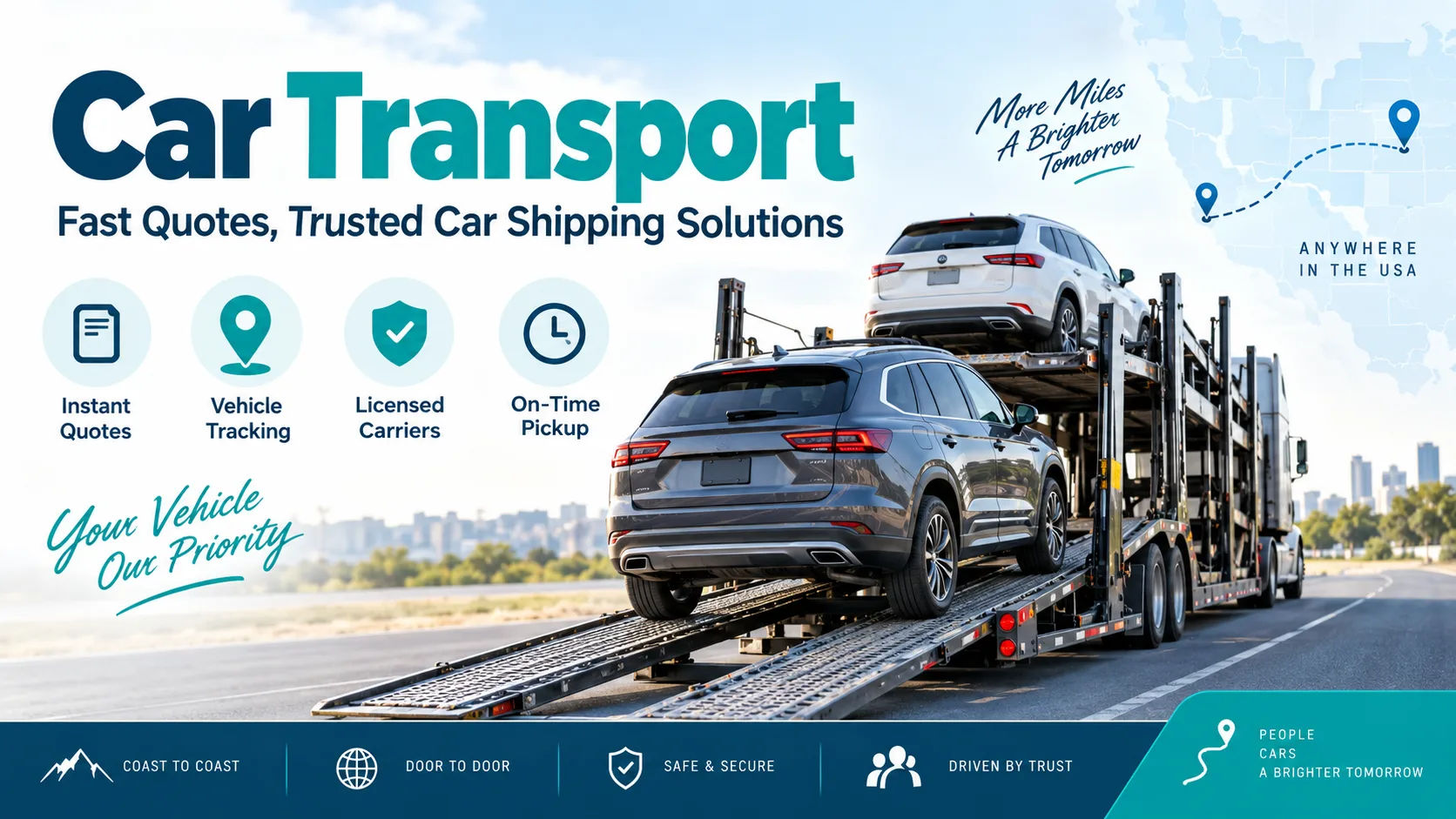
An open carrier transports vehicles on an uncovered trailer. Rain, snow, sunlight, road spray, dust, and airborne debris can reach the vehicle during the journey.
An enclosed carrier places the vehicle inside a trailer with a roof and side protection. Depending on the trailer design, the sides may be rigid metal panels or heavy-duty fabric curtains. Either design provides substantially more protection than an uncovered carrier.
enclosed auto transport becomes particularly useful during long-distance transportation. A car traveling hundreds or thousands of miles can pass through several different weather systems. A dry departure does not necessarily mean the vehicle will experience dry conditions throughout the trip.
Protection From Rain
Rain is one of the simplest weather concerns during vehicle transportation.
When a car travels on an open carrier, rain can reach the paint, glass, wheels, trim, and other exposed surfaces. The vehicle can also encounter water and road spray kicked up by other vehicles.
Enclosed transport keeps most of that exposure away from the vehicle. A properly covered trailer prevents normal rainfall from directly reaching the car while it is being transported.
This can be especially useful for vehicles with sensitive finishes, freshly applied coatings, older weather seals, or interiors that require additional care.
The vehicle may still be exposed briefly while being loaded or unloaded, but the majority of the journey occurs under cover.
Does Enclosed Transport Protect Against Snow and Ice?
Yes. Enclosed shipping is particularly valuable when a route passes through areas experiencing winter weather.
Snow, freezing rain, slush, and road salt can create unpleasant conditions for a vehicle traveling on an open carrier. Road-treatment chemicals can also stick to exterior surfaces and the underside of an exposed vehicle.
An enclosed trailer creates a barrier between the vehicle and those outside conditions. This is one reason enclosed shipping is frequently considered for valuable vehicles being moved during winter.
Still, protection depends on the carrier and trailer. You should ask whether the trailer is hard-sided or soft-sided and what level of weather protection it provides.
What About Hail?
Hail is one of the clearest examples of why enclosed transportation can make sense for an expensive vehicle.
A vehicle sitting outside during a severe hailstorm can potentially suffer dents, paint damage, broken glass, or other cosmetic problems. A covered trailer places a physical barrier between the vehicle and falling hail.
Hard-sided enclosed trailers provide the strongest physical barrier. Soft-sided trailers can still provide substantial protection from weather, but their construction is different.
If hail protection is a major reason for choosing enclosed shipping, ask the transporter exactly what type of trailer will carry the vehicle.
Does Enclosed Auto Transport Protect Against Sun and UV Exposure?
It can.
Direct sunlight exposes a vehicle to ultraviolet radiation during long periods of outdoor transportation. Modern automotive finishes are designed to withstand normal sunlight, but extended exposure can still matter for older paint, delicate finishes, convertible materials, leather, vinyl, and certain restored vehicles.
An enclosed trailer blocks direct sunlight during transit. This means the vehicle does not spend several days sitting under intense sun while traveling across the country.
For a normal daily driver, this may not be a major consideration. For a collector car with an expensive restoration, however, reducing unnecessary exposure can be worthwhile.
Some premium enclosed carriers also offer climate-controlled environments for particularly sensitive vehicles, although this is not a standard feature of every enclosed shipment.
Protection From Dust, Dirt, and Road Spray
Weather is only part of the problem.
A vehicle traveling on the highway encounters dust, dirt, road grime, water spray, salt, and small particles thrown into the air by surrounding traffic.
An open carrier leaves the vehicle exposed to those conditions.
With enclosed transportation, the trailer walls provide a barrier against much of that contamination. Your vehicle can therefore arrive considerably cleaner than it might after traveling the same distance on an open trailer.
This does not mean the vehicle will necessarily arrive perfectly clean. Loading areas, unloading areas, and normal handling can still introduce some dust or dirt.
Nevertheless, enclosed shipping substantially reduces environmental exposure during the actual journey.
Does Enclosed Auto Transport Protect Against Road Debris?
Although road debris is not technically weather, it is another major advantage of enclosed shipping.
Small stones, gravel, sand, tar, and other particles can be thrown from roads or nearby vehicles. On an open carrier, the transported vehicle is exposed to these conditions.
An enclosed trailer creates a physical barrier.
This can reduce the possibility of rock chips, road grime, and other cosmetic problems, which is particularly important when transporting a vehicle with expensive paintwork.
For a $20,000 daily driver, a small paint chip may be annoying but manageable. For a restored classic or exotic vehicle, even minor cosmetic damage can be much more significant.
Is the Vehicle Completely Weatherproof?
This is where expectations need to be realistic.
Enclosed transport offers substantially greater weather protection, but it does not make a vehicle completely immune to every environmental or transportation risk.
The vehicle still has to leave its storage location, be driven or moved into the trailer, and be unloaded at its destination.
During these stages, it may experience rain, snow, wind, or other conditions.
There are also differences between carriers. A well-maintained hard-sided trailer can provide a different level of protection from a soft-sided trailer. The condition of doors, seals, curtains, and the trailer itself can also matter.
Therefore, it is better to think of enclosed shipping as weather-protected transportation, rather than an absolute guarantee that the vehicle will never encounter moisture or environmental exposure.
Hard-Sided vs. Soft-Sided Enclosed Trailers
Not every enclosed trailer is built exactly the same way.
Hard-sided trailers use rigid walls and a roof. They generally provide the strongest physical barrier against outside conditions and are often preferred for extremely valuable vehicles.
Soft-sided trailers use a rigid framework combined with heavy-duty fabric or vinyl side panels. They can still provide strong protection against rain, dust, sunlight, and normal road exposure.
For many vehicles, either option may be suitable.
For an extremely valuable classic, exotic, museum-quality vehicle, or irreplaceable automobile, it is reasonable to ask whether a hard-sided trailer is available.
The important thing is not simply seeing the word "enclosed" in a quote. Find out what equipment the carrier actually intends to use.
What Enclosed Transport Does Not Protect Against
Weather protection is an important benefit, but enclosed shipping does not eliminate every transportation risk.
Loading and unloading are still critical parts of the process. A vehicle can potentially be damaged by improper loading, unsuitable equipment, careless handling, or incorrect tie-down procedures.
That is why the carrier's experience matters as much as the trailer itself.
Some enclosed carriers use hydraulic lift gates and soft-tie systems, which can be useful for low-clearance and specialty vehicles. These systems can reduce the risk of scraping or damaging sensitive components during loading.
Insurance is another separate issue.
Do not assume that choosing an enclosed trailer means every type of damage is automatically covered. Ask for the carrier's cargo insurance information and understand what the policy covers before handing over the vehicle.
Which Vehicles Benefit Most From Weather Protection?
Enclosed transportation can make sense for almost any vehicle owner who places a high value on minimizing environmental exposure.
It is especially common for classic and antique cars because older paint, trim, interiors, and mechanical components may require more careful handling.
Luxury and exotic vehicles are another obvious category. These vehicles can have expensive finishes, low ground clearance, specialized bodywork, and costly replacement parts.
Restored vehicles can also benefit. If you have spent years restoring a car and invested heavily in its paint and interior, exposing it to thousands of highway miles may not be appealing.
Show cars and collector vehicles are another strong use case.
For these vehicles, the additional cost of enclosed shipping can be viewed as part of protecting the vehicle's condition rather than simply paying for transportation.
Is Enclosed Shipping Worth the Extra Cost?
Enclosed shipping generally costs more than open transportation because enclosed carriers transport fewer vehicles and require specialized equipment and handling.
The exact price difference depends on the route, vehicle size, carrier availability, timing, and level of service. Some industry sources report premiums ranging from roughly 30% to 60%, although actual quotes can vary considerably.
Whether that additional cost is worthwhile depends on the vehicle.
For an ordinary daily driver, open transport may provide perfectly reasonable value.
For a $100,000 sports car, a rare classic, or a freshly restored vehicle, the additional expense may be easier to justify.
The decision should ultimately come down to the value of the vehicle, its condition, your tolerance for environmental exposure, and the route it will travel.
How to Get the Most Protection During Enclosed Shipping
Choosing enclosed shipping is only the first step.
Before pickup, thoroughly photograph the vehicle from multiple angles. Take close-up photographs of existing scratches, dents, chips, wheels, glass, and other imperfections.
Make sure the condition report accurately records existing damage.
Remove personal belongings unless the carrier specifically permits them under its terms. Check that loose accessories are secured and follow the carrier's preparation instructions.
Ask questions before booking.
Find out whether the trailer is hard-sided or soft-sided, how the vehicle will be secured, whether a lift gate is available, what insurance coverage applies, and whether the carrier has experience transporting your particular type of vehicle.
At delivery, inspect the vehicle before signing the final paperwork. Compare its condition with the pickup documentation and your photographs.
These simple steps provide another layer of protection regardless of the weather.
Enclosed vs. Open Auto Transport for Weather Protection
The difference becomes fairly straightforward when weather exposure is the main concern.
Open transport leaves the vehicle exposed to rain, snow, sunlight, road spray, dust, and other outdoor conditions.
Enclosed transport places the vehicle inside a covered trailer, greatly reducing direct environmental exposure.
Open transport is usually the more economical choice and is suitable for many everyday vehicles.
Enclosed transportation is more appropriate when protecting the vehicle's appearance and condition is a higher priority than minimizing shipping cost.
Neither method makes the vehicle completely risk-free. Good equipment, experienced handling, proper documentation, and appropriate insurance remain important with either option.
Conclusion
Yes, enclosed auto transport is specifically designed to provide much stronger protection from weather and environmental exposure than open vehicle shipping. A covered trailer helps shield the vehicle from rain, snow, hail, direct sunlight, road spray, dust, road salt, and small debris during the majority of the journey.
That makes enclosed shipping particularly attractive for classic cars, exotic vehicles, luxury automobiles, restored vehicles, collector cars, and other vehicles where maintaining the exterior condition is important.
However, enclosed does not mean completely risk-free. The vehicle can still be exposed briefly during loading and unloading, and transportation damage can result from poor handling rather than weather. The carrier's equipment, loading procedures, insurance, and experience should therefore be considered alongside the enclosed trailer itself.
For an everyday vehicle where keeping costs low is the priority, open transport can still be a practical choice. But when weather exposure and cosmetic protection are major concerns, paying more for enclosed shipping can provide valuable peace of mind and a significantly better level of protection throughout the journey.